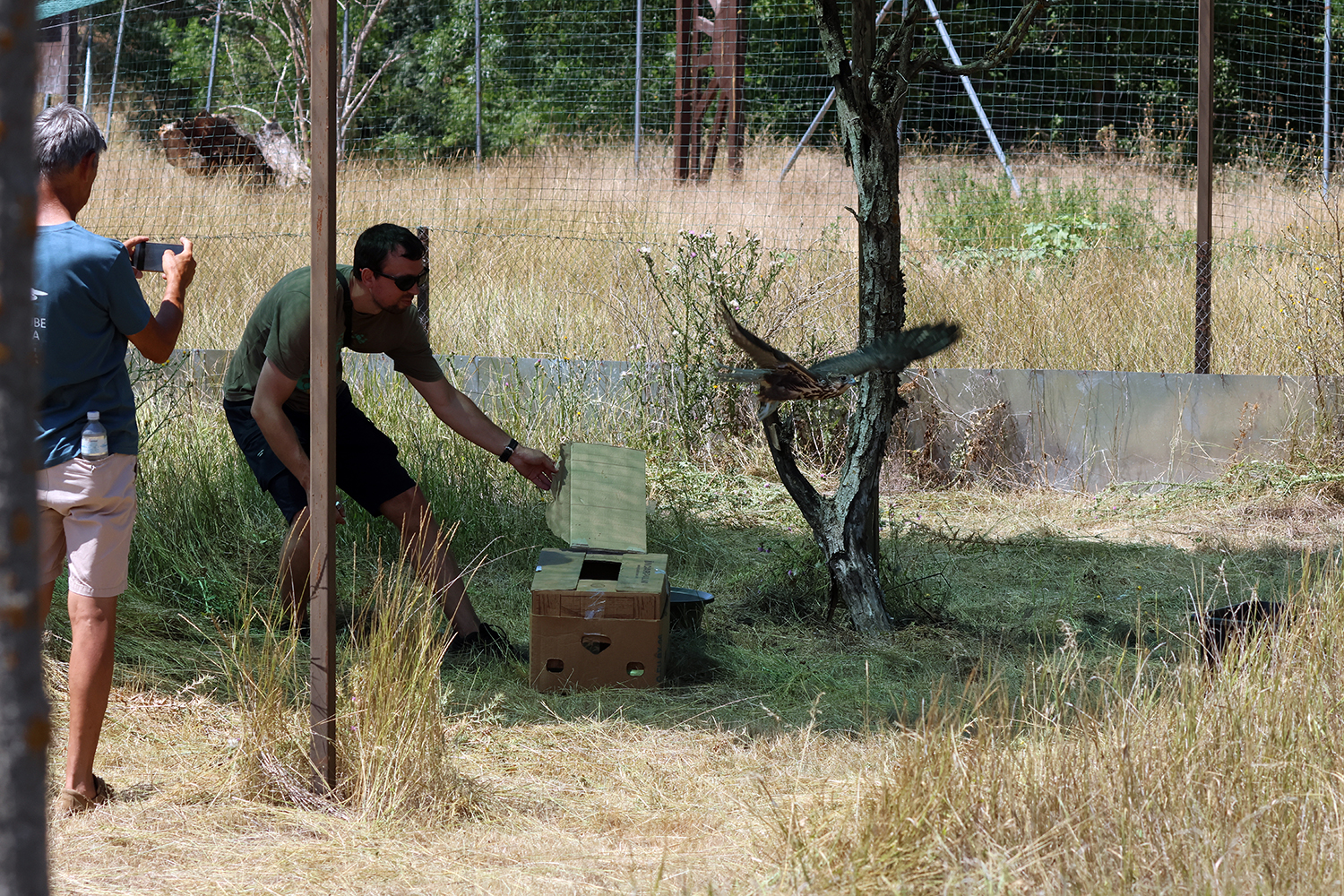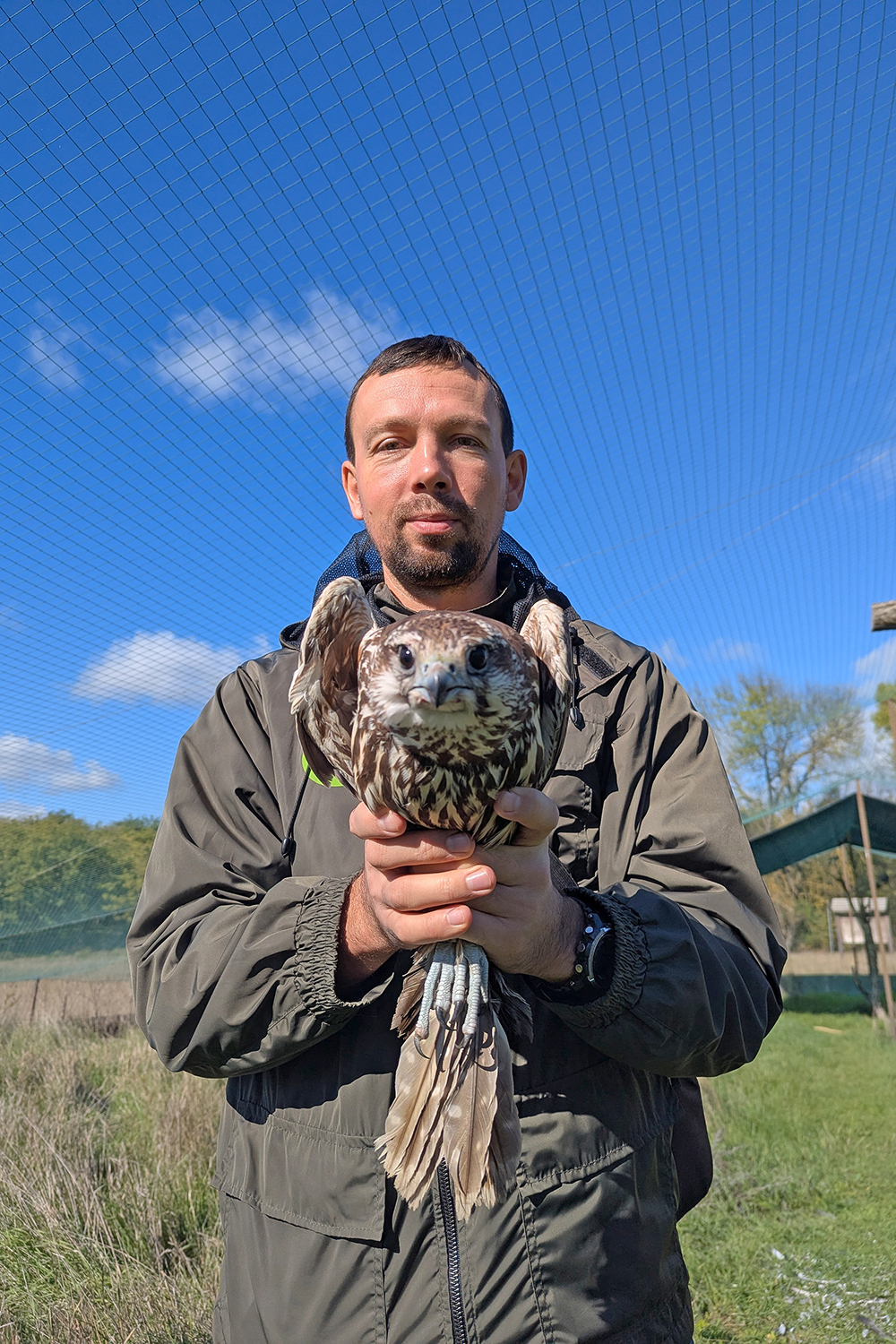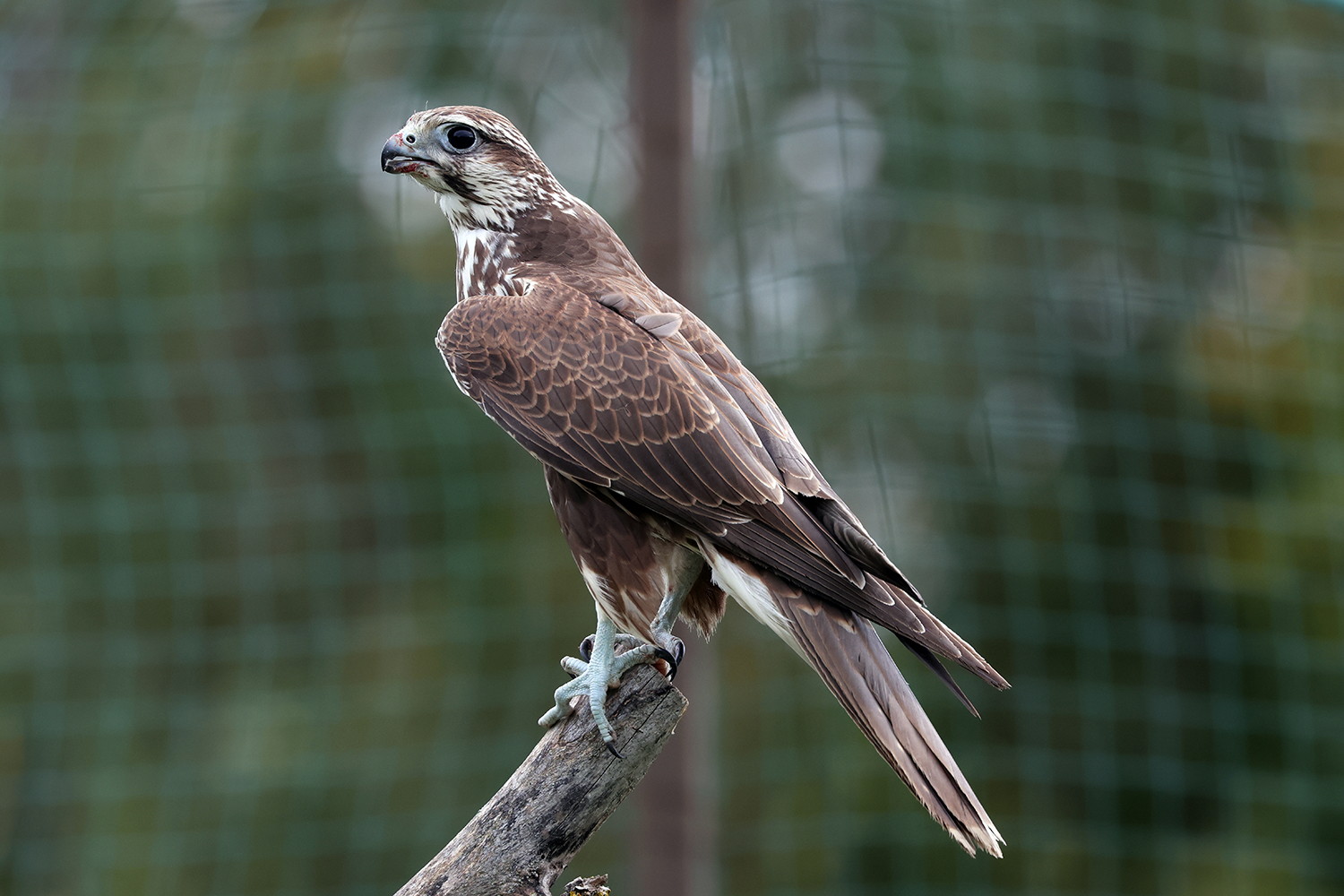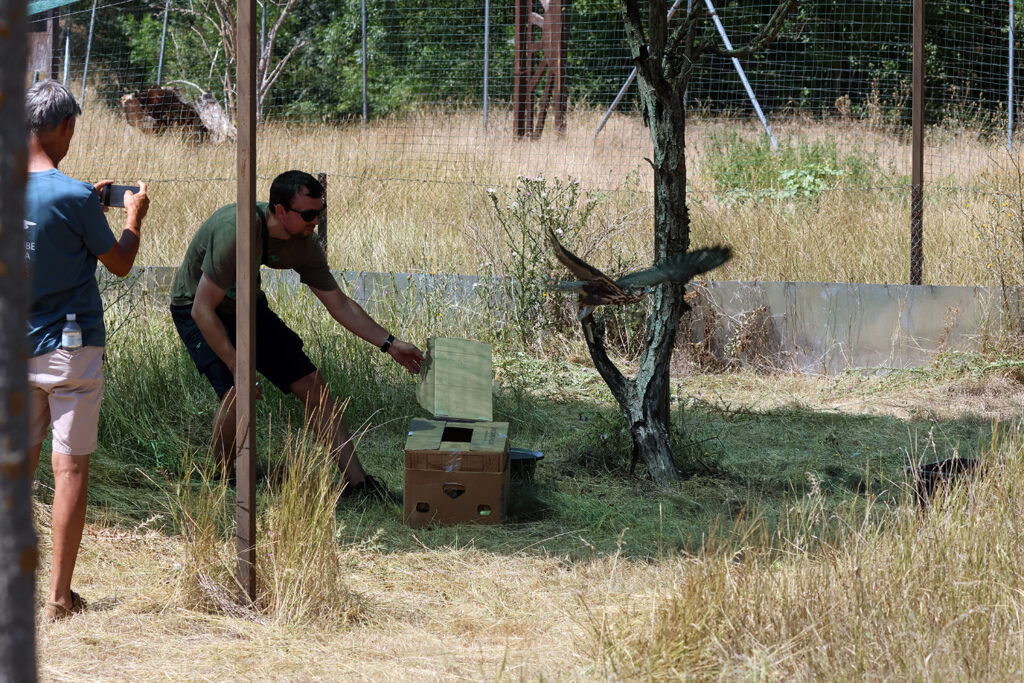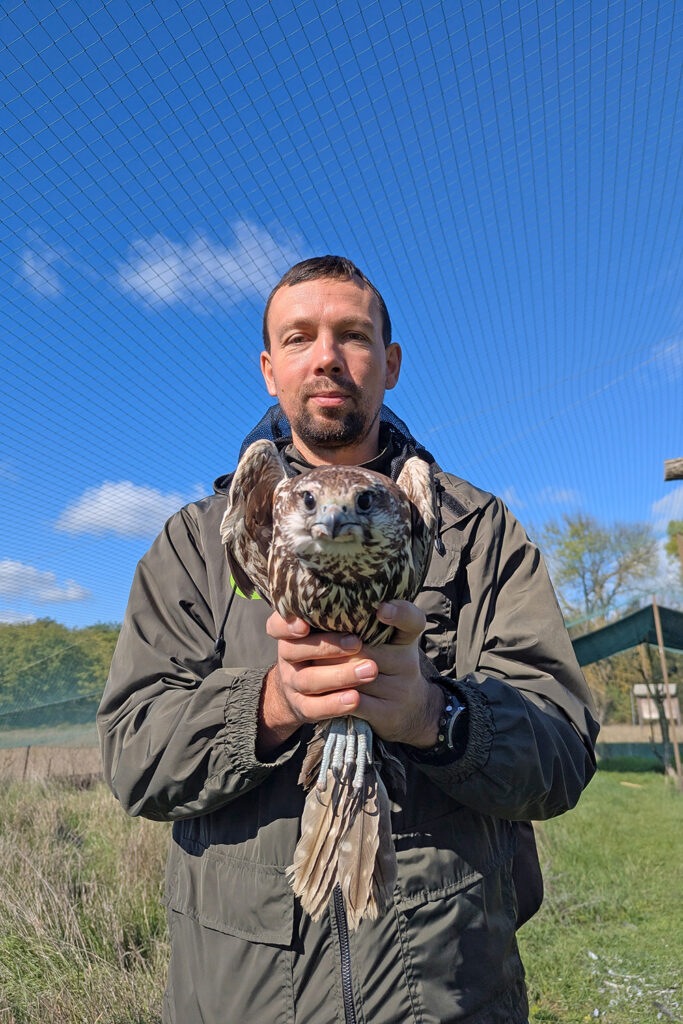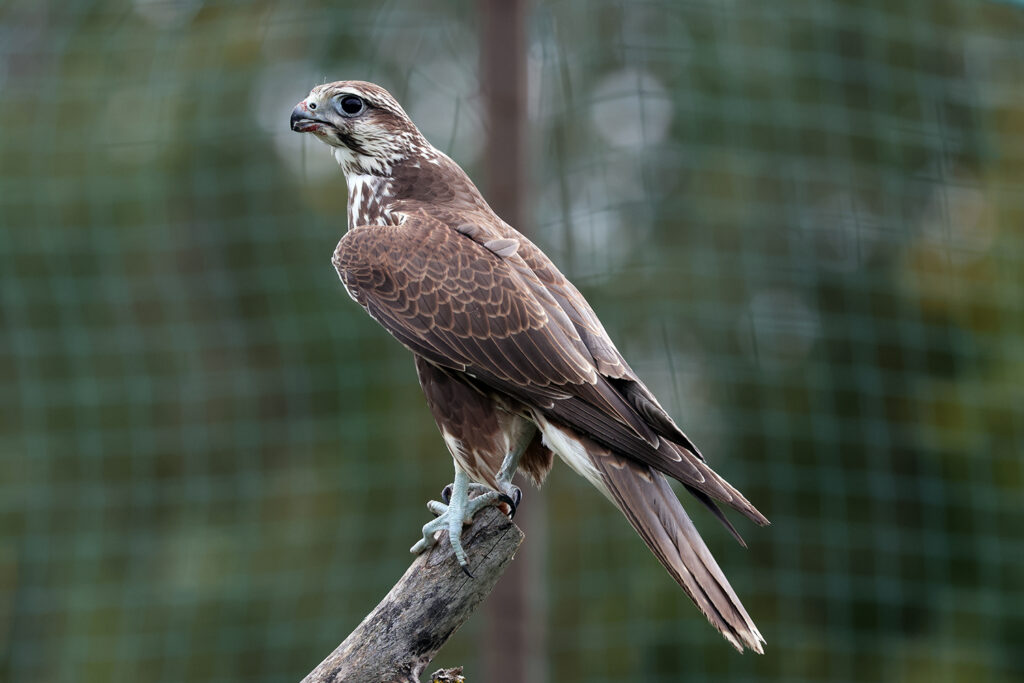

In cooperation with the Kyiv Zoo, the Rewilding Ukraine team released a saker falcon (Falco cherrug) into the wild. The event took place within the Tarutyno steppe in Odesa Region – an area that represents an important stronghold for the rewilding of steppe ecosystems.
The saker falcon is one of the largest and fastest birds in Eurasia and plays a crucial role in the trophic structure of open landscapes.
This release is part of a long-term programme aimed at restoring natural processes in the steppe ecosystems of southern Ukraine. The return of apex predators contributes to the stabilisation of small vertebrate populations, the maintenance of biodiversity, and the enhancement of ecosystem resilience across the region.
A predator that keeps the steppe in balance
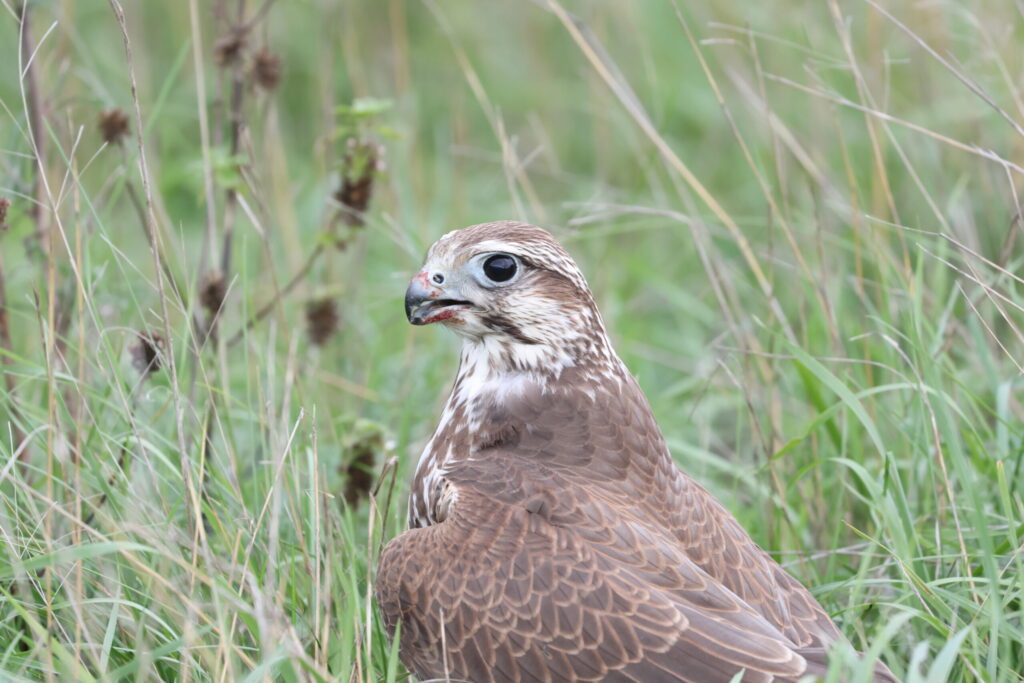
In nature, nothing happens by chance. Saker falcons are key regulators of small rodent populations and, consequently, architects of ecological balance. In healthy steppe ecosystems, these fast and resilient falcons act as natural “sanitarians,” preventing population outbreaks of murine rodents that can degrade vegetation cover and disrupt ecosystem dynamics.
Their return is an indicator of landscape recovery – a sign that natural forces are once again functioning autonomously.
A species on the brink: decline and recovery of the saker falcon
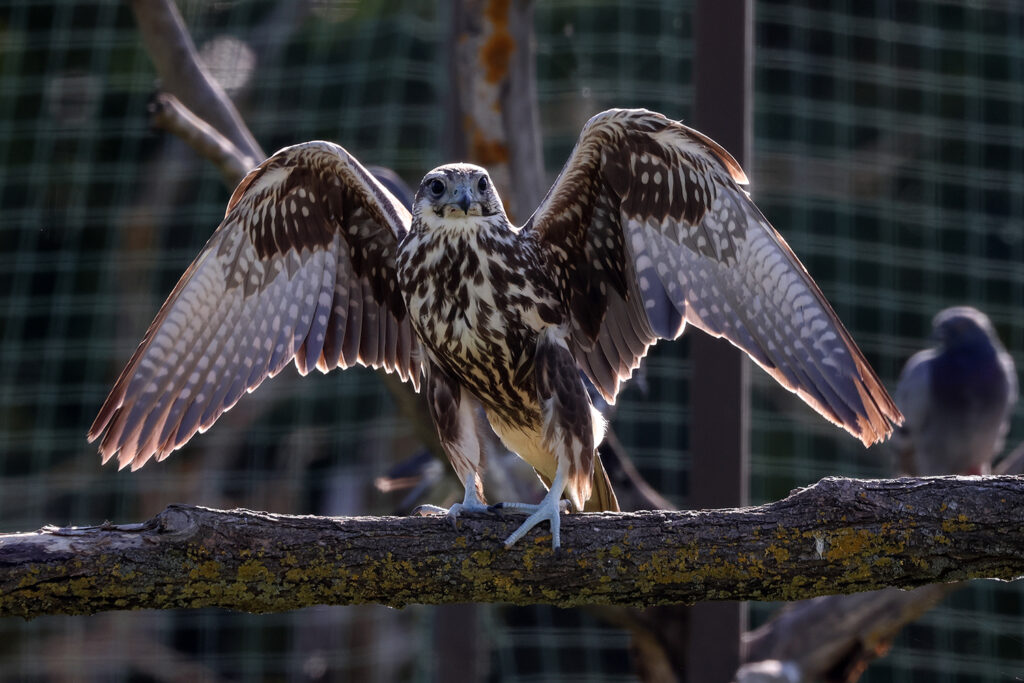
By the late 20th century, the situation had become critical: only around 50 breeding pairs remained across the entire territory of Ukraine. Habitat loss, poaching, and a declining prey base had pushed the species to the brink of extinction.
Coordinated efforts by nature reserves and zoological institutions produced the first tangible results. By the early 21st century, the Ukrainian population had recovered to approximately 250 breeding pairs – representing more than one third of the European population. The Kyiv Zoo has become one of the key scientific centres for the breeding and conservation of this species.
Currently, eight breeding individuals are maintained there, and even during the years of war, specialists have continued to successfully raise viable offspring.
The journey of one bird: from incubation to the sky above the Tarutyno steppe
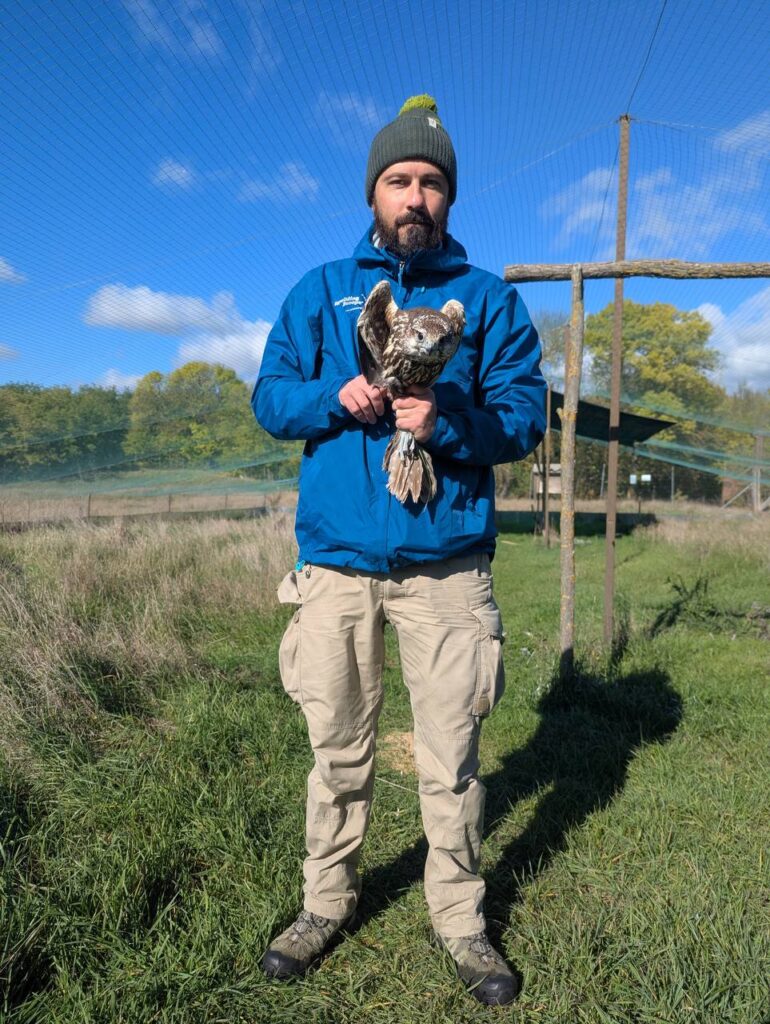
The saker falcon released into the wild on 19 October 2025 hatched in mid-May. It was incubated and raised by its parents, and from the very beginning had minimal contact with humans. This approach is a fundamental prerequisite for successful reintroduction, as the bird must perceive humans as a threat rather than a source of food.
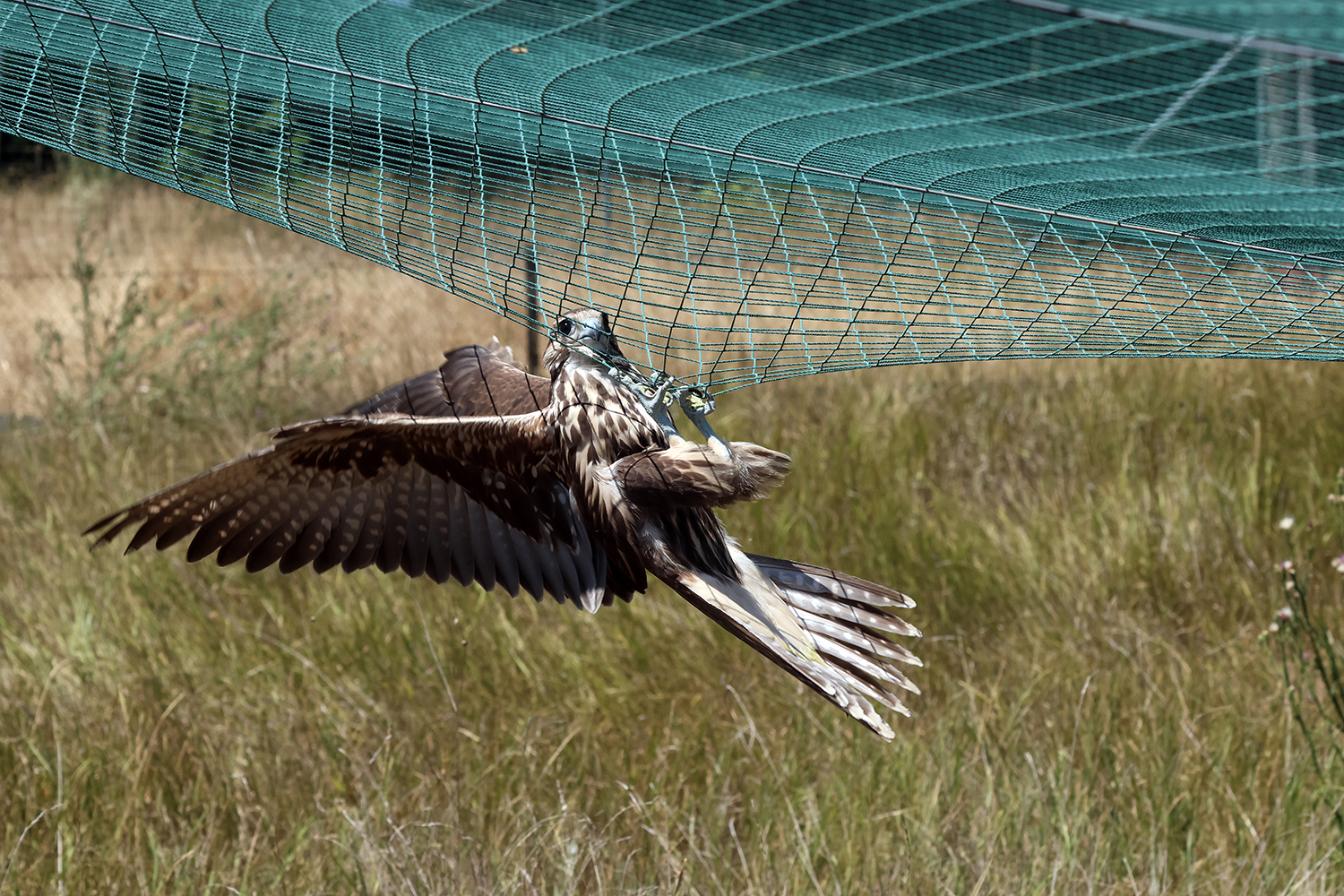
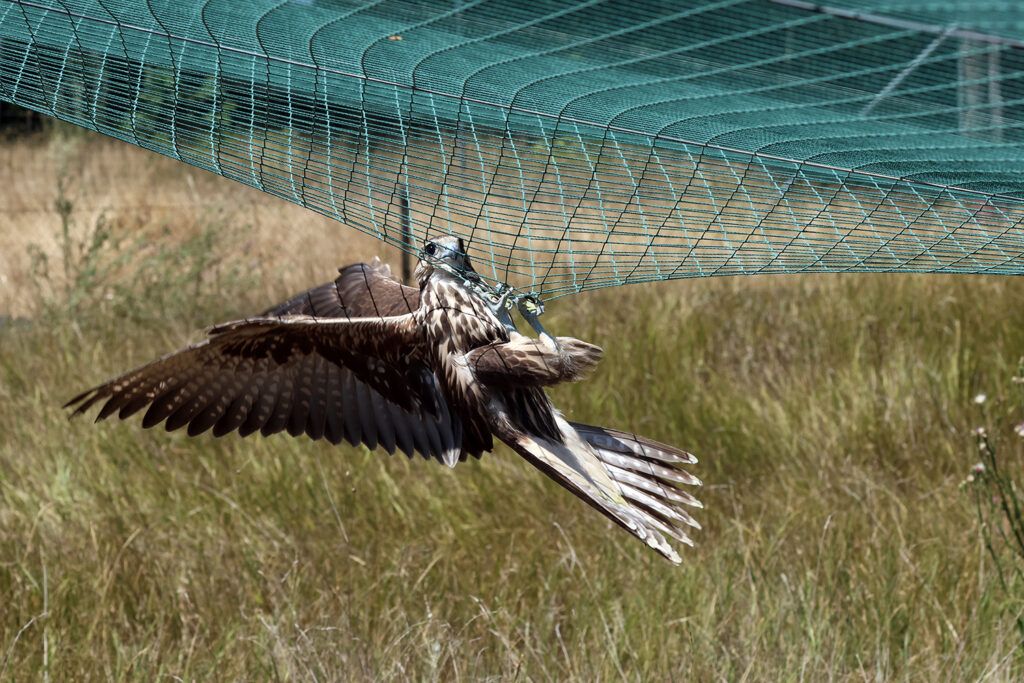
The falcon learned its first flight skills and basic hunting techniques at the Kyiv Zoo. On 23 July, it was transferred to the Tarutynskyi Steppe, where it was placed in a specially constructed adaptation aviary. There, it underwent three months of final preparation and acclimatisation.
Under the supervision of the Rewilding Ukraine team and Kyiv Zoo specialists, the young predator learned to manoeuvre at high speeds, track prey in open landscapes, and survive under variable weather conditions. All of this was preparation for the moment when its wings would finally touch true freedom.
The moment of return
When the aviary door opened in October, the falcon hesitated for not a second. It burst into the cold autumn sky, swiftly gained altitude, and disappeared into the vastness of a landscape that had once been its natural home.
For us, this flight is a symbol of the steppe coming back to life.
We now await its return in spring. And perhaps very soon, a new generation of saker falcons – the offspring of a bird that has come home – will appear in the skies over Ukraine.