

Ukraine’s steppes are among Europe’s most vulnerable ecosystems.
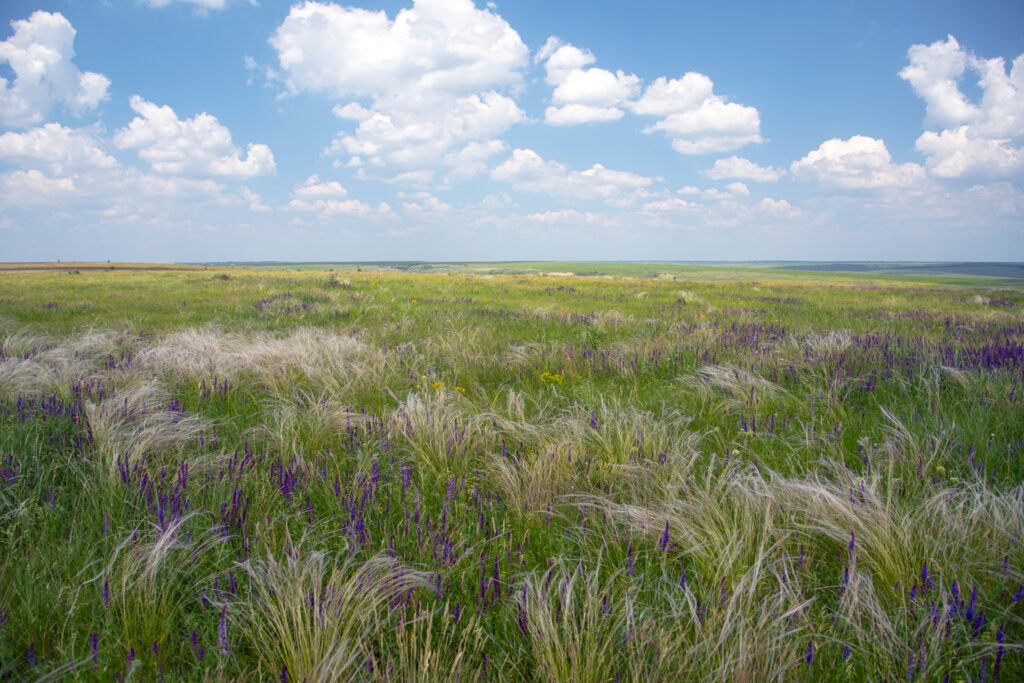
Today, they are threatened not only by decades of intensive land use and climate change, but also by the devastating impacts of war. In Kherson Oblast, military activities have destroyed native vegetation, damaged soils, and accelerated the degradation of natural grasslands and hay meadows. At the same time, in Odesa Oblast, the loss of agricultural land in other parts of the country has significantly increased pressure on the remaining steppe habitats, many of which are now at growing risk of being ploughed.
To address these challenges, Rewilding Ukraine and its partners have launched the project “Living steppes – resilient communities: post-war restoration of steppe grasslands and hay meadows in Southern Ukraine.”
The project will be implemented in the Velyka Oleksandrivka community in Kherson Oblast and the Budzhak community in Odesa Oblast. Its goal is to develop and test a practical methodology for restoring steppe ecosystems damaged by war that can later be applied across other regions of Ukraine.
The project will use nature-based restoration techniques, including the transfer of hay containing seeds of native steppe plants, sod transplantation, sowing of native species, and long-term ecological monitoring. An important part of the project will be comparing restoration results with natural recovery processes that have been taking place for many years in the Tarutyno Steppe Landscape Reserve.
For more than five years, Rewilding Ukraine has been working together with specialists from the Askania-Nova Biosphere Reserve to restore illegally ploughed areas within the Tarutynskyi Steppe. This new project will build on that practical experience to support the post-war restoration of natural steppe ecosystems in Kherson Oblast.
Restoring steppe grasslands and hay meadows is about much more than bringing back biodiversity. It also means restoring natural ecological processes, improving soil health, increasing the resilience of landscapes to drought, and supporting traditional nature-friendly livelihoods such as livestock grazing, haymaking, and beekeeping, which remain essential for local communities.
This project is implemented within the framework of “Resilient Roots – Strengthening Grassroots Environmental Leadership in War-Affected Ukraine” with the support of Austausch e.V., GreenRoots Hub, and Brot für die Welt.