
2025 became a year of deepened cooperation with local communities for the Rewilding Ukraine team, a year of scaling up conservation actions and taking new steps toward the restoration of wildlife in the Ukrainian part of the Danube Delta and the adjacent steppe areas. Despite challenging security conditions, we continued working to ensure that nature can recover and that people and wildlife can coexist in harmony.
Engagement with local communities
Working with local communities remains a key element of rewilding. In 2025, we focused on supporting traditional land use practices, joint planning of conservation solutions, and strengthening dialogue between local community, scientists, and authorities.
One of the key issues of the year was the problem of steppe fires. The publication “When the steppe is burning: the fight for the future of the Tarutynskyi Steppe” drew attention to the challenges facing this unique landscape and to the efforts aimed at its conservation.
An important milestone was the signing of a memorandum of cooperation between the Budzhak Settlement Council, the Askania-Nova Biosphere Reserve, and the NGO Rewilding Ukraine, which lays the foundation for long-term protection and restoration of steppe ecosystems.
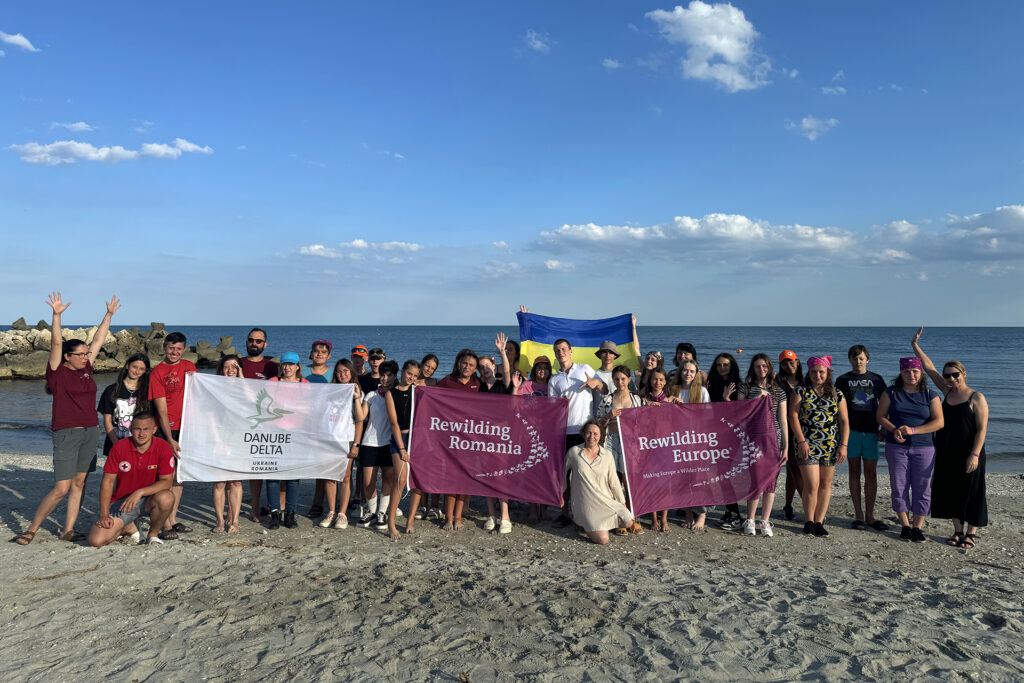
This July, an educational camp on the Romanian side of the Danube Delta rewilding landscape saw 30 high school students reconnect with nature. A range of engaging activities and exciting field trips gave the children an appreciation for rewilding and inspiration for the future.
Throughout the year, the team held a series of online and offline events dedicated to the implementation of the Emerald Network in Ukraine, including case studies from the Danube Biosphere Reserve and the Tarutynskyi Steppe. Discussions focused on management plans as well as military and anthropogenic impacts on natural areas.
Special attention was given to human–wildlife coexistence in Vylkove. Together with the Vylkove City Council, meetings were held with local residents to support traditional gardening and small-scale farming on the islands of the Kiliia Delta. To protect orchards from wild herbivores—red deer and fallow deer—as well as from free-ranging livestock, special fencing mesh was purchased.
This solution has already proven effective, helping to reduce conflicts between economic activities and the recovery of wild animal populations. Fencing works, initiated last year under the memorandum with the Vylkove City Council, were expanded in 2025, allowing even more residents to receive this support. At the same time, the team continues to monitor the movements and population numbers of red deer and fallow deer in the delta.
Nature for veterans
In 2025, the “Nature for Veterans” programme was further developed. During the autumn, four week-long rehabilitation camps for war veterans were held in the Danube Delta—a landscape where wild nature is gradually recovering after long-term human impact.
Following a successful pilot camp in May, the Rewilding Ukraine team continued programme implementation in partnership with the National Council for Health Protection and Safety, with financial support from the Nonviolent Peaceforce International representation in Ukraine under the Aid4Heroes project. The programme combines time in nature, shared activities, and the restoration of participants’ inner balance.

Wildlife releases
2025 was also an important year for the return of wild animals to the region’s natural ecosystems.
Throughout the year, several groups of fallow deer and red deer were released into the wild, representing an important step toward restoring natural ecosystem dynamics.
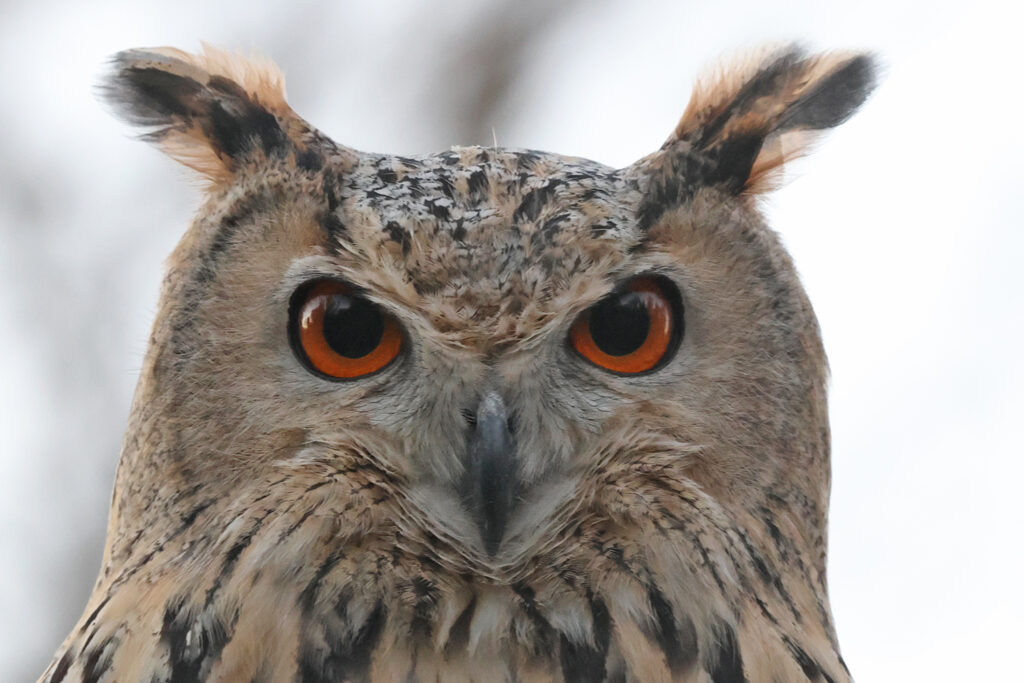
Once again, the call of Europe’s largest owl—the Eurasian eagle-owl (Bubo bubo)—resounded over the Danube at night. Four more young birds—two males and two females—were released as part of the species recovery programme. In total, 19 individuals have already been released under this initiative, and work on establishing a viable local population continues.
In cooperation with the Kyiv Zoological Park, the Rewilding Ukraine team also released a saker falcon (Falco cherrug) in the Tarutynskyi Steppe landscape reserve of local importance. One of the largest and fastest diurnal birds of prey in Eurasia, this species plays a crucial role in the trophic structure of open steppe landscapes.
In addition, several large-scale releases of European hamsters took place during the year. Overall, more than 100 hamsters have already been given a second chance in the wild thanks to cooperation with the Hamster Rescue Centre, with support from the Kyiv Zoological Park and the Rewilding Ukraine initiative.
Science, strategy, and climate solutions
In 2025, we continued our work on carbon conservation and the restoration of soil fertility in steppe ecosystems, demonstrating that rewilding is an important tool for climate adaptation.
On 23 December, the event “Rewilding the Ukrainian part of the Danube Delta region: achievements and perspectives” was held in Odesa, bringing together scientists, government representatives, conservation organisations, and partners.
During the event:
the results of a large-scale wetland and steppe restoration project supported by the Endangered Landscapes & Seascapes Programme were summarised;
the Strategic Plan for the conservation and restoration of ecosystems in the Ukrainian part of the Danube Delta region was presented;
a pilot ecosystem restoration action plan for 2026–2030 was introduced and discussed.
Despite ongoing security challenges, many participants joined the event online, once again confirming that collective work for nature continues under all circumstances.
Sincere thanks to ELSP and Rewilding Europe for their support!